
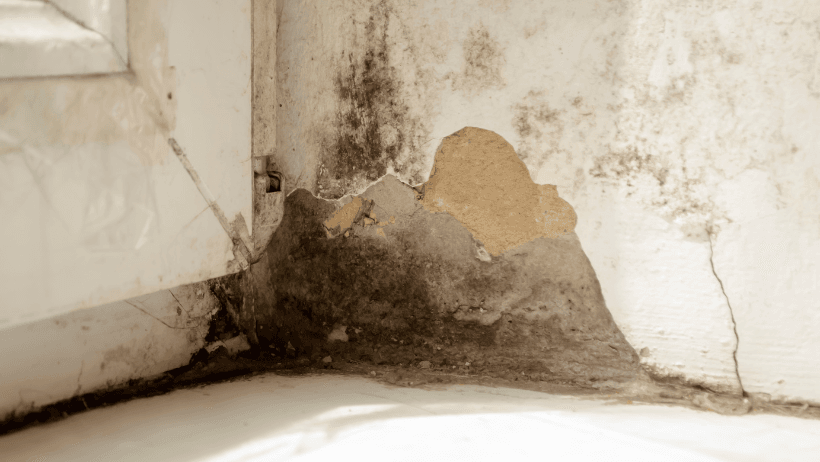
The Bleach Myth
It is the most common old-wives’ tale in home maintenance: “If you see mold, spray it with bleach.”
Here is the scientific truth: Chlorine bleach does not kill mold on porous surfaces like wood, drywall, or concrete.
- Surface Tension: Bleach has a high chemical surface tension. It sits on top of the surface.
- The Roots: Mold acts like a plant; it has “roots” (hyphae) that grow deep into the pores of the material.
- The Result: The bleach wipes off the visible color, but the water in the bleach actually feeds the roots below. A few days later, the mold comes back—often stronger and more aggressive.
Toxic Black Mold (Stachybotrys chartarum)
In Ohio’s humid climate, damp basements are breeding grounds for Stachybotrys, commonly known as Black Mold. This fungus produces mycotoxins that can cause respiratory issues, allergies, and asthma flare-ups, especially in children and the elderly.
The Source is Moisture
You can kill the mold, but if you don’t kill the moisture source, it will return. Mold needs three things to survive:
- Food: (Paper on drywall, wood joists, organic dust).
- Temperature: (Your basement is perfect).
- Water: (High humidity, leaks, seepage).
You can only control #3.
The Spartan Remediation Strategy
We don’t just scrub. We solve.
- Identify: Find the source of the water (Is it a crack? Is it condensation? Is it a leak?).
- Stop the Water: Fix the foundation, install Interior Drainage, or set up a commercial-grade dehumidifier.
- Treat: We recommend professional remediation that uses antimicrobial agents designed to penetrate the surface and kill the roots, or removing the infected materials entirely.
Don’t gamble with your lungs. If you smell mustiness, you are inhaling mold spores. Fix the leak, dry the air, and breathe easy.
Read More:
- Is that white stuff mold? Check Efflorescence on basement walls.
- Reduce humidity with modern sealing: Crawlspace encapsulation.
#BlackMold #MoldRemediation #HealthyHome #BasementHealth #BleachMyth #ColumbusOhio #SpartanWallRepair