
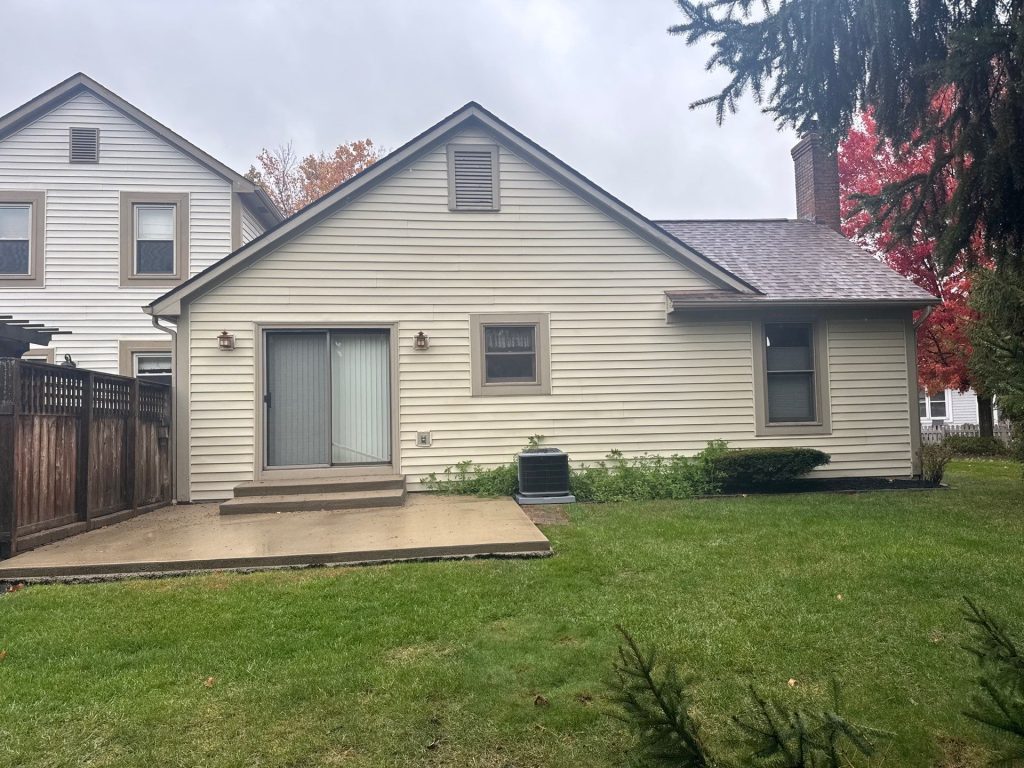
From saturated lawns in Powell to flooding basements in Dublin, Central Ohio’s weather demands robust water management. Discover how commercial-grade yard drainage can effectively eliminate pooling water for good.
The Central Ohio Drainage Struggle: Suburban Growth Meets Low-Permeability Soils
Dublin and Powell feature some of the most beautiful, well-manicured properties in the Greater Columbus area. Yet, despite pristine landscaping, homeowners across neighborhoods like Muirfield Village or wedge developments near the Scioto River face a persistent structural adversary: standing water. Weeks after a typical Central Ohio spring rainstorm, low spots in lawns remain soft, spongy marshes, and landscaping mulch frequently washes right across driveways.
This persistent pooling is caused by a combination of regional geology and modern construction practices. Local soils consist primarily of dense, high-plasticity clay, which possesses a very low percolation rate. When heavy storms roll through, the ground saturates almost instantly, leaving nowhere for surface runoff to go. Compounding the problem, modern suburban grading often channels water tightly between properties. Without a dedicated, heavy-duty drainage infrastructure, this trapped water migrates toward your home, exerting immense hydrostatic pressure against your basement walls or leaking directly into crawlspaces.

Buried Downspouts: Managing the Torrential Roof Load
The first line of defense in yard water management is controlling roof runoff. A standard residential roof can capture thousands of gallons of water during a single heavy downpour. When this massive volume exists, standard gutters via aluminum downspouts dump directly onto the soil next to the foundation, acting like a high-velocity injection system feeding water straight toward your basement or crawlspace.
Splashing plastic splash blocks at the base of your gutters are entirely inadequate for Central Ohio downpours. A permanent solution requires burying your downspouts and routing the water completely away from the home’s foundation. However, standard residential-grade installations often rely on cheap, thin corrugated black plastic piping. This material is highly prone to crushing under lawnmowers, easily penetrated by tree roots, and incredibly difficult to clean out once it fills with shingle grit and leaves.
A commercial-grade approach utilizes heavy-duty, smooth-walled PVC pipe (such as schedule 40 or SDR-35). Smooth PVC maximizes water velocity, prevents debris from clinging to the interior walls, and easily withstands vehicle traffic or root intrusion. These lines are cleanly trenched away from the foundation and terminated far down-slope using debris filters and pop-up emitter valves that open automatically under water pressure to release the storm load safely away from your home.
Commercial-Grade French Drains: Eradicating Subsurface Saturation
While buried downspouts handle roof water, a commercial-grade French drain is the ultimate system for eliminating standing surface water and high water tables in your yard. Unlike a standard surface ditch, a properly engineered French drain captures and redirects water silently underground before it can turn your lawn into a swamp.

The construction of a long-lasting, commercial-grade French drain requires strict adherence to proper engineering principles:
- The Trench: A precise trench is excavated through the wet zone, utilizing a consistent slope (at least a 1% fall) to ensure water flows efficiently via gravity toward the discharge point.
- Geotextile Fabric Lining: The raw dirt trench is lined with heavy, non-woven commercial geotextile filter fabric. This prevents fine clay silt from migrating into the system and clogging it over time—a step cheap installers routinely skip.
- Perforated Smooth PVC: A perforated smooth PVC pipe is laid at the bottom of the trench with the holes facing downward, which allows rising groundwater to enter the pipe efficiently.
- Clean Coarse Aggregate: The trench is filled to the top with washed river rock or clean round aggregate, allowing surface water to drop straight through the lawn into the pipe instantly.
The entire fabric envelope is then wrapped over the stone like a burrito, topped with a thin layer of sand or highly permeable topsoil, and replanted with sod. The result is an invisible, high-capacity underground river that instantly evacuates yard water.
The Spartan Standard: Veteran-Owned, Direct-Owner Craftsmanship
Digging up a yard requires precision, hard work, and complete honesty. At Spartan Wall Repair & Waterproofing, we don’t deploy slick, corporate sales reps armed with high-pressure scripts designed to upsell you on components your property doesn’t need. As a Marine veteran-owned and operated company, owners Dave and John personally conduct every single evaluation, design the drainage layouts, and ensure flat-rate, transparent pricing. We treat your property with absolute respect, utilizing target-specific excavation methods to keep your lawn as clean as possible. Every structural drainage system we install is engineered to industrial standards and backed by our elite Lifetime Transferable Warranty.
Frequently Asked Questions (FAQ)
Will a French drain freeze and back up during cold Columbus winters?
No. When installed using commercial-grade smooth PVC and pitched with a proper slope, water never stands inside the pipe long enough to freeze solid. Additionally, the system terminates using a pop-up emitter valve with a built-in automated freeze relief slot, allowing water to escape safely even if ice accumulates at the very tip of the discharge line.
Where does all the collected water actually go once it leaves my yard?
Depending on your specific property layout in Dublin or Powell, we route the discharge lines to dump safely into existing municipal storm sewages, open street curbs, dedicated drainage ditches, or a remote low-point on your acreage far away from any neighboring structures.
Can you install these heavy-duty lines without destroying my existing landscaping?
While trenching does require removing turf, our experienced team utilizes precise sod-cutting techniques. We cleanly peel back your existing lawn, place the excavated clay soil on protective tarps to preserve your grass, and carefully reinstall the native sod over the finished trench, resulting in a system that blends back into your yard within just a few weeks.
Take Control of Your Property’s Water Management
Stop letting heavy rains ruin your lawn and threaten your foundation. Get a direct, honest, owner-performed drainage assessment from the Marine veterans at Spartan Wall Repair & Waterproofing. Request Your Free Drainage Evaluation
