
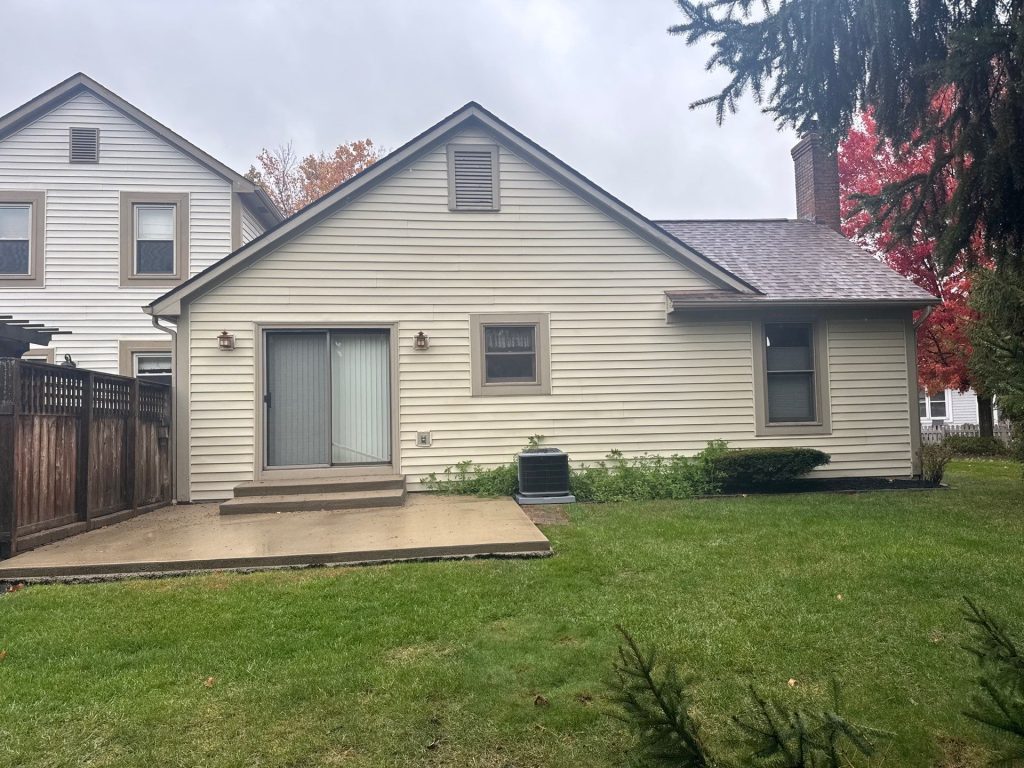
When a heavy Central Ohio storm hits, many homeowners in Dublin, Ohio, watch with growing anxiety as their beautiful backyards transform into swampy lakes. Standing water that remains for hours—or days—is more than a landscaping nuisance. It is a direct threat to your home’s structural foundation. Managing surface and subsurface water requires an engineered approach that goes far beyond digging a basic trench or tossing a flexible pipe into the ground.
The Hidden Threat: How Standing Surface Water Destroys Foundations
An oversaturated yard does not just ruin your lawn; it fundamentally alters the environment surrounding your foundation footprint. Understanding the physical mechanics of water accumulation highlights why quick DIY fixes inevitably fail.
The Danger of Oversaturated Sump Pits
When thousands of gallons of rainwater pool on your lawn, gravity forces that moisture down into the ground immediately adjacent to your basement walls. This massive influx of subsurface water fills your perimeter drainage tile, forcing your interior sump pump system to work continuously. Overworked sump pumps are highly prone to premature mechanical failure, and during a severe storm, a dead pump means an instantly flooded basement.
Foundation Settlement and Soil Washout Mechanics
As standing water saturates the soil beneath your patios, walkways, and foundation footers, it softens the underlying support structures. Constant cycles of pooling and drying can lead to soil washout, eroding the stable earth that keeps your foundation level. This uneven soil support causes foundation settlement, resulting in structural cracking throughout your home.
⚠️ Prevention Warning: Allowing surface water to pool within ten feet of your home’s exterior walls maximizes hydrostatic pressure, accelerating structural masonry cracking and basement water intrusion.
The Breakdown: French Drains vs. Buried Downspouts
A truly effective, commercial-grade yard drainage layout addresses water at two distinct levels: subsurface water table control and high-volume surface runoff redirection.
How French Drains Manage Subsurface Groundwater Tables
If your lawn remains soggy long after a storm passes, you are dealing with a high subsurface water table or saturated clay soil. A French drain acts as an underground relief valve. It consists of a deep trench sloped precisely to guide water away, lined with heavy non-woven geotextile fabric, filled with clean washed river rock, and centered around a perforated pipe. Groundwater rises into the rock matrix and enters the pipe, dropping the water table below your lawn’s root zone.
Why Buried Downspouts Are Crucial for Catching Roof Runoff
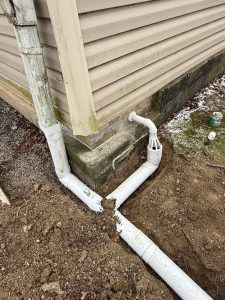
During a heavy downpour, a standard roof sheds thousands of gallons of water. If your gutters discharge directly onto the ground near your corners, your foundation is taking a direct hit. Buried downspouts capture this immense surface volume instantly at the roofline, sealing it inside a solid pipe network that routes the water safely past your lawn directly to a designated municipal discharge point or bubbler pot.
The Cost of Cheap Materials: The Corrugated Pipe Warning
Many local landscaping operations attempt to cut costs by using flexible, black corrugated plastic pipe for yard drainage. At Spartan, we consider this a major operational failure. Corrugated pipe features a ribbed interior that traps silt, debris, and roof shingle granules, leading to permanent clogs within 24 to 36 months. Furthermore, its thin walls are easily crushed by lawnmowers or punctured by tree roots.
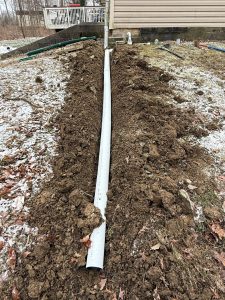
The Spartan standard requires smooth-wall, heavy-gauge Schedule 40 or SDR-35 PVC piping. The smooth interior allows water and debris to flush completely clean, while its rigid construction handles heavy surface loads without collapsing, ensuring your system functions flawlessly for decades.
Frequently Asked Questions
Q: Can I run my yard drainage directly into the street or city storm sewer?
Dublin municipal codes restrict direct stormwater discharge. Drainage systems must generally terminate into approved natural swales, dry wells, pop-up emitters, or designated drainage easements rather than directly onto city roadways or neighboring properties.
Q: How deep does a French drain need to be buried?
To effectively manage subsurface water and remain safely below the active lawn root zone, a professional French drain trench is excavated between 18 to 24 inches deep, maintaining a precise slope of at least 1% toward the discharge zone.
Q: How often do smooth PVC drainage lines need to be cleaned?
Unlike corrugated pipe, smooth-wall rigid PVC lines are virtually self-cleaning due to continuous high-velocity water flow. However, we recommend checking the debris baskets at your catch basins annually before spring rains arrive.
Defend Your Lawn and Foundation
Do not wait for the next Central Ohio storm cycle to turn your property into a swamp. Contact Spartan Wall Repair & Waterproofing today to design a permanent, commercial-grade exterior drainage or French drain system for your Dublin home and protect your foundation with veteran-grade precision.
