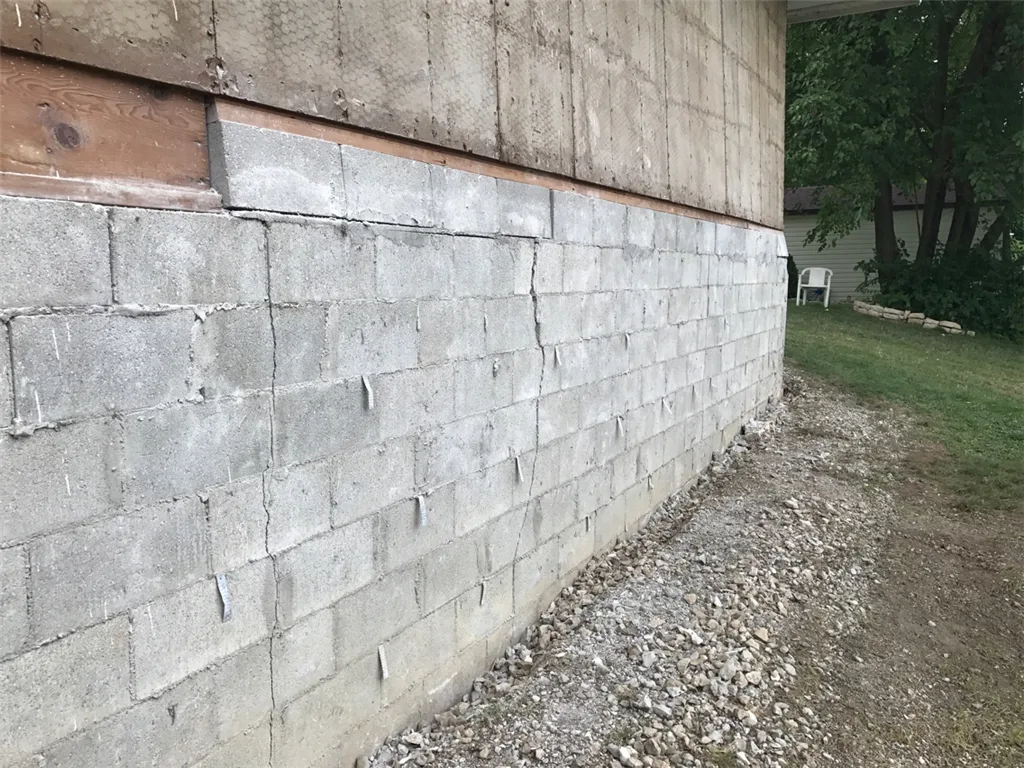
Discovering a crack in your basement wall is an unsettling moment for any homeowner. Whether you reside in a classic cinder block home or a modern poured-concrete foundation in Central Ohio, wall cracks serve as the primary visual warning system for changing structural conditions beneath your house. However, not all basement cracks indicate an immediate emergency.
While some cracks stem from natural concrete curing and minor settling, others point to severe structural failure caused by expansive soil and hydrostatic pressure. Learning how to distinguish between horizontal wall cracks and vertical wall cracks will help you assess your home’s risk level and take action before cosmetic damage turns into an expensive foundation failure.
Vertical Wall Cracks: Causes, Risk Levels, and Solutions
Vertical cracks run straight up and down or within 30 degrees of vertical along your foundation wall. They are the most common type of foundation wall fracture in residential properties.

Why Vertical Cracks Form
In newly constructed poured concrete walls, vertical cracks frequently form during the initial curing process as concrete shrinks and loses moisture. In block foundations, vertical cracks can occur as the foundation settles into the soil beneath the concrete footings during seasonal shifts.
Severity Level: Low to Moderate
Most narrow vertical cracks (less than 1/8-inch wide) are non-structural. While they rarely threaten the load-bearing integrity of your home, they are the leading entry point for groundwater seepage during heavy rainstorms. If a vertical crack opens wider at the top than the bottom, it indicates that one side of your foundation footing is settling deeper than the other, requiring professional tracking.
Recommended Repair
Non-structural vertical cracks in poured concrete can be permanently sealed using low-pressure polyurethane or epoxy injection systems. The flexible resin penetrates through the full depth of the wall, filling the crack completely and blocking future water leaks.
Horizontal Wall Cracks: A Warning Sign of Severe Damage
Unlike vertical cracks, horizontal cracks run sideways across your basement wall, usually two to three block courses down from the top. A horizontal crack is a structural warning sign that demands immediate attention.
Why Horizontal Cracks Form
Central Ohio features dense clay soils that expand when wet and contract when dry. During heavy rain, water saturates the soil surrounding your foundation, creating immense lateral hydrostatic pressure. This inward pushing force exceeds the bending strength of cinder blocks and mortar joints, causing the wall to shear, break, and push inward along the mortar lines.
Severity Level: Critical / High Emergency
Horizontal wall cracks indicate that your foundation wall is actively failing under soil pressure. If left unaddressed, the lateral force will cause the middle of the wall to bow inward, leading to masonry displacement, structural roof framing shifts, and potential wall collapse.
Recommended Repair
Horizontal cracks cannot be fixed with surface caulking, hydraulic cement, or waterproof paint. They require engineered structural stabilization, such as carbon fiber reinforcement straps for minor bowing (under 2 inches) or heavy-duty steel I-beams for severe wall deflection and mortar shearing.

Stair-Step and Diagonal Cracks in Block Foundations
In cinder block foundations, cracks often follow the mortar joints in a diagonal “stair-step” pattern. These cracks typically occur near the corners of the basement.
Stair-step cracks are caused by differential soil settlement—where one section of the foundation footing drops faster than adjacent sections—or by early-stage hydrostatic pressure pushing against exterior corners. If stair-step cracks are accompanied by horizontal cracking or wall bowing, structural bracing is required to stop further movement.
Quick Crack Diagnostic Guide
| Crack Orientation | Primary Cause | Structural Risk | Primary Solution |
|---|---|---|---|
| Vertical (Thin) | Concrete curing shrinkage or minor settling | Low (Water risk only) | Epoxy or Polyurethane Crack Injection |
| Horizontal | Hydrostatic soil pressure pushing inward | Severe / Critical | Carbon Fiber Straps or Steel I-Beams |
| Stair-Step | Differential footing settlement or lateral pressure | Moderate to High | Helical Piers or Carbon Fiber Straps |
Protect Your Home with Spartan Wall Repair
Catching foundation cracks early prevents cosmetic basement issues from escalating into major structural failures. A thorough structural evaluation accurately measures crack width, length, and wall deflection to identify the exact cause of foundation stress.
At Spartan Wall Repair & Waterproofing, our Marine Corps veteran-led team provides honest assessments, precision engineering, and lifetime-warranted repairs across Greater Columbus. We evaluate foundation cracks transparently without sales tactics or unnecessary upsells.
Concerned About a Crack in Your Foundation?
Don’t leave your foundation to chance. Contact Spartan Wall Repair & Waterproofing online or call (614) 368-7612 to schedule a free, professional foundation crack inspection and estimate today!
