
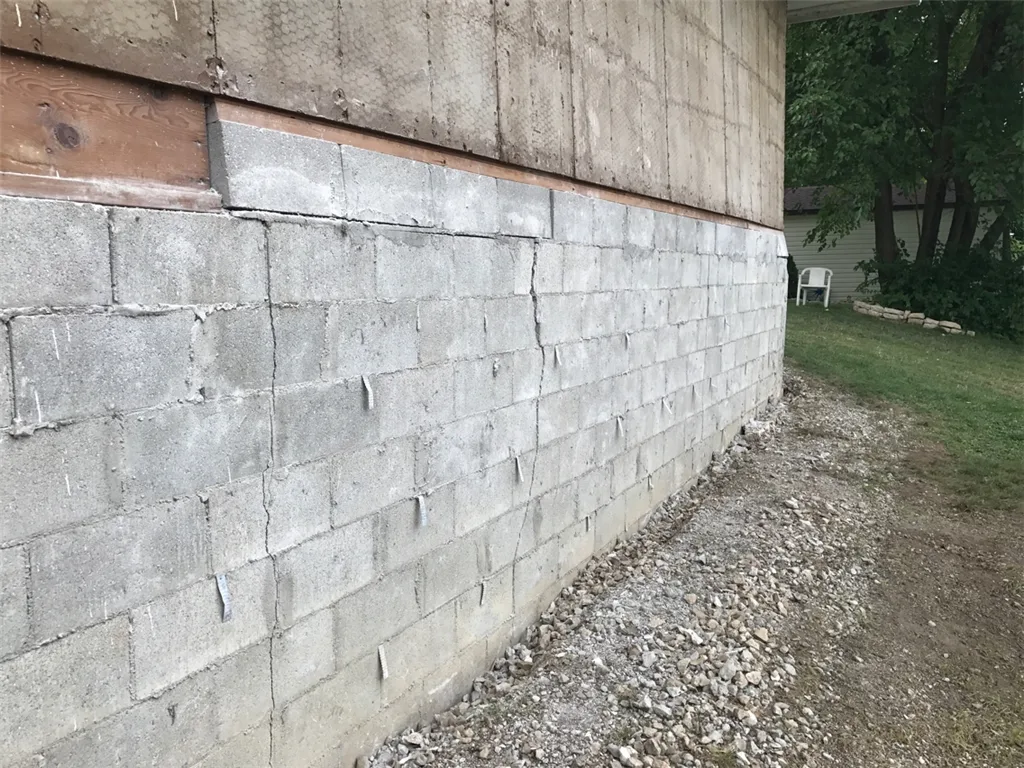
Every time a heavy thunderstorm rolls through Central Ohio, thousands of homeowners look out their windows to a stressful sight: a mini-pond forming right against their home’s exterior walls. You watch the water rise, wondering how much of it is actively seeping through your basement masonry blocks or rotting the framing of your crawlspace.
Water pooling against your house foundation is a structural ticking time bomb. While many property owners believe a damp basement requires thousands of dollars in interior sub-floor plumbing, the root cause is almost always an exterior water management failure. If you don’t redirect water away from your foundation perimeter, hydrostatic pressure will eventually force its way into your home, cracking your walls and ruining your basement.
At Spartan Wall Repair & Waterproofing, we address yard drainage problems with Marine Corps precision. We don’t believe in selling you complex interior drainage systems if a targeted exterior solution can solve the problem at the source. Led by USMC veteran David J. Wirtz, our inspections are honest, direct, and focused on permanent structural defense.
The “Clay Bowl” Effect: Why Central Ohio Yards Retain Water
To understand why water accumulates against your foundation, you have to look at the unique geology of Central Ohio. Regions across Franklin, Delaware, and Union counties are notorious for dense, high-plasticity clay soils. Unlike sandy soil, which allows rainwater to drain vertically, clay acts like a thick waterproof barrier. It absorbs water incredibly slowly and holds onto moisture for days.
When your home was built, contractors dug a massive hole in this dense clay, poured the footers, raised the foundation walls, and then backfilled the gap around the house with loose dirt. This creates what engineers call the “clay bowl” effect. The loose, backfilled soil around your foundation absorbs water much faster than the undisturbed clay lawn around it. When rain falls, your entire yard acts like a funnel, channeling water directly into the porous soil right next to your basement or crawlspace walls.
4 Common Culprits Behind Standing Water
While the soil lays the groundwork for pooling, specific structural and landscape issues escalate the water accumulation:
- Improper Yard Grading: Over the decades, soil naturally settles. If the dirt around your perimeter has dropped, your lawn will slope inward toward your home rather than sloping away, pulling surface runoff directly against your foundation.
- Short Gutter Downspouts: A standard roof sheds thousands of gallons of water during an Ohio storm. If your downspouts drop that water only 2 or 3 feet away from your walls, they are dumping massive amounts of fluid straight into the “clay bowl.”
- Clogged or Crushed Underground Lines: Many modern homes feature buried downspouts. However, if these thin corrugated plastic pipes become packed with leaves or crushed by tree roots, they back up and erupt right next to your foundation.
- Lawn Traps and Swales: Patios, sidewalks, or poorly designed flower bed landscape edging can block natural surface channels, trapping water against the house with no path of escape.
Professional Infrastructure Solutions That Work Permanently
Relying on store-bought plastic solutions or generic advice from landscapers won’t protect a foundation footer. Permanent structural dry zones require dedicated water diversion infrastructure:

Solid-Core Buried Gutter Extensions
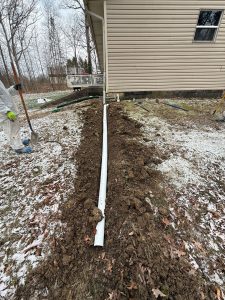
Instead of cheap corrugated pipe that traps debris and collapses under soil weight, we install heavy-duty, smooth-wall PVC lines. We pipe your roof runoff 10 to 20 feet away from your home, discharging it safely out to daylight, a natural slope, or a dedicated bubbler pot where it cannot migrate back to your basement.
Commercial-Grade French Drains
If your yard suffers from a high subsurface water table or standing lawn saturation, a French drain is the ultimate defense. We excavate a deep trench, line it with heavy geotextile fabric, lay down a perforated rigid pipe, and fill it with clean washed gravel. This intercepts traveling groundwater and routes it away safely before it can ever touch your foundation block walls.
Frequently Asked Questions About Local Yard Drainage
Will a French drain stop my basement from leaking?
In many cases, yes. By capturing and routing groundwater before it ever reaches your foundation, a French drain relieves the immense hydrostatic pressure that forces water through concrete block mortar joints.
How deep should downspout lines be buried in Ohio?
Downspout lines should be buried at least 12 to 18 inches deep, sloping downward away from the home. This depth ensures the line remains stable, handles heavy lawn mower traffic, and prevents water from freezing and backing up during freezing Central Ohio winters.
Can poor yard drainage cause a foundation wall to bow?
Absolutely. When water pools against the foundation, the surrounding clay soil swells significantly. This expanding soil creates immense inward physical force (hydrostatic pressure) that eventually pushes concrete block walls out of plumb, causing horizontal cracking and bowing.
Keep the Water Away From Your Foundation Footers
Before you let a corporate franchise convince you to cut out your basement floor for an expensive interior drainage system, find out if an exterior adjustment can solve the problem for good. Get an honest, owner-conducted yard grading evaluation from USMC Veteran-owned Spartan Wall Repair & Waterproofing. Dave will personally inspect your property and provide a clear, flat-rate strategy. Call us today at 614-368-7612 or email office@spartanwallrepair.com.
