
The Job of a Retaining Wall
A retaining wall has a tough job. It has to hold back tons of soil that naturally wants to slide downhill. In Ohio, where Wet Basement Solutions are often needed, the soil behind these walls becomes incredibly heavy when saturated with rain.
Signs Your Wall is Failing
Unlike basement walls, retaining walls are exposed to the elements on both sides. Watch for these red flags:
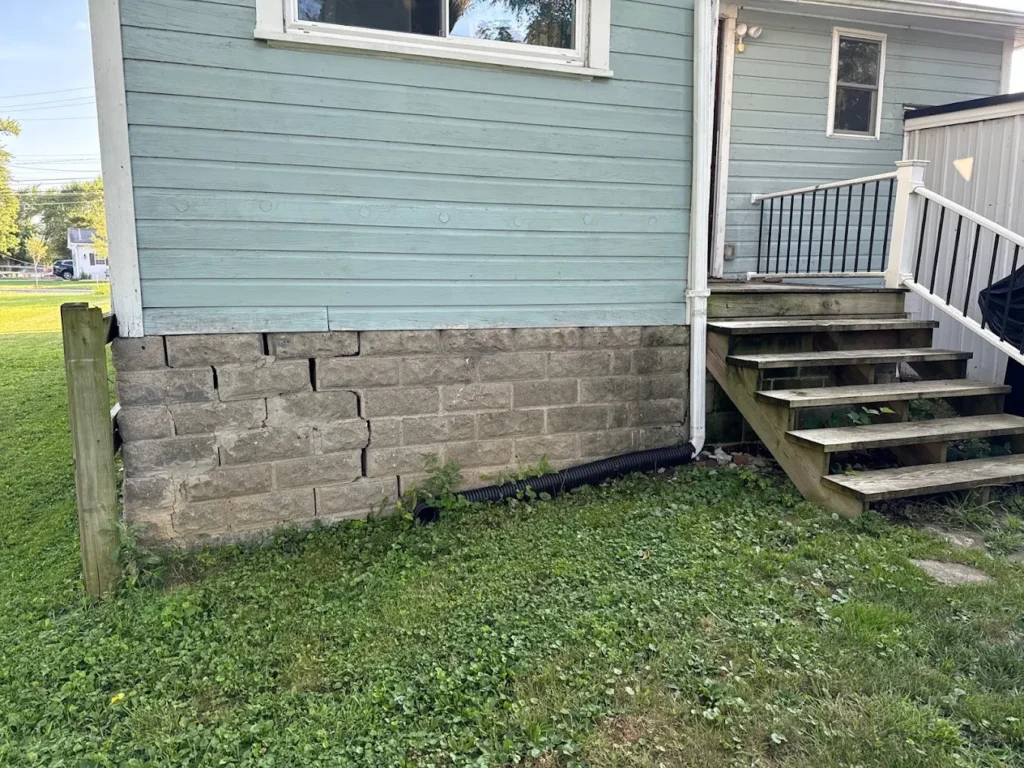
- Leaning / Tilting: The top of the wall is further out than the bottom. This means the soil pressure has overcome the wall’s leverage.
- Cracking: Large vertical or stair-step cracks indicate the masonry units are breaking apart under stress.
- Separation: The wall is pulling away from adjacent structures (like your porch, driveway, or garage).
Why Drainage is Everything
90% of retaining wall failures are caused by water. If there is no drainage stone or “weep holes” behind the wall, water builds up. This Hydrostatic Pressure pushes the wall over. It’s the same force that breaks your basement walls.
The Fix: Anchor It
We don’t always have to tear the wall down and start over.
- Helical Tie-Backs: We screw large steel anchors deep into the soil behind the wall until they hit stable earth. We then attach a steel plate to the wall and pull it back, locking it in place.
- Drainage Retrofit: We must relieve the water pressure to ensure the repair lasts.
Read More:
- Understand the force pushing the wall: Hydrostatic Pressure vs. Lateral Earth Pressure.
- Manage the water behind the wall: Grading and landscaping.
#WallStabilization #OhioFoundationRepair #OhioHomes #FoundationExperts #OhioContractors #StrongerFoundation #OhioBusiness
